5 reasons to rethink short-term trading
When you’re new to the market, buying into the latest meme stock or coin can seem like a good way to get started, but trading—trying to capitalize on short-term changes in a stock price—can carry a great deal of risk, and you could lose out on some of the growth opportunities that come with a long-term investing approach. Here are five reasons to pursue your financial goals through long-term investing rather than short-term trading.
Avoiding FOMO
When a stock is rallying, you may be tempted to believe you could be nimble enough to dart in and out with a gain. But the real fear of missing out (FOMO) to consider is the prospect of missing out on the long-term returns of holding the shares of a great company in a prospering industry. Not only is it difficult to turn a profit by trying to time the market, but short-term gains, as satisfying as they may seem, might be small in comparison with what a long-term holding could be worth. Also, by the time you hear about a “hot” stock, you may have missed out on easy gains—and risk buying high.
The one-and-done conundrum
Let’s say you turn a profit on a quick trade. What’s your next move? Can you consistently pick winners? Short-term trading requires a sophisticated understanding of the markets and real-time monitoring of any information that could impact stock prices so that you can make informed decisions. If you’re relying on social media for information, it can be hard to verify that the person providing tips is really the expert they claim to be. Always check with your professional advisor.
Prioritizing peace of mind
Long-term investing may allow you to sleep better at night. When you buy and hold an asset, you not only have time to recover from any downturns but are also less likely to make an emotional decision that’s based on daily swings in the market. Short-term trading, on the other hand, requires day-to-day—and sometimes hourly—management and monitoring of your holdings and news cycles. Each person needs to weigh their risk tolerance.
Taxes, taxes, taxes
Paying a capital gains tax is a relatively good problem to have—congratulations, your asset increased in value. However, federal capital gains tax rates are significantly higher for assets sold after being held one year or less than they are on assets held for more than one year. If you realize capital gains on assets you sold less than a year after buying them, the gain will be taxed at federal ordinary income tax rates (similar to wages or salary)— which is taxed up to 37 percent, depending on your federal marginal income tax bracket. Conversely, the tax rate on long-term capital gains may be 0 percent, 15 percent or 20 percent—depending on your adjusted gross income during the tax year in which the sale was made, which means you may keep more of what you made. The 3.8% net investment income tax may also apply.
Reinvesting
The longer your time horizon, the more you can benefit from the disbursement of corporate profits via cash dividends, stock dividends, stock splits and share repurchases during the life of a long-term investment. The distribution of corporate profits via these methods could potentially boost share prices over the long term, and when they’re re-invested in your initial investment, they can help build wealth over time. Keep in mind that not all stocks pay dividends and that if a particular company offers dividends, the dividends are not generally guaranteed to be paid.
Remember, building wealth takes time, a clear investment strategy and a mix of assets that factor in when you’ll need the money and how much risk you’re willing to take. Of course, factors such as supply-chain shocks, interest rates and economic reports can impact your holdings, so make sure you review your asset allocation regularly and rebalance as needed.
Disclaimer
The material provided on this website is for informational use only and is not intended for financial or investment advice. Bank of America Corporation and/or its affiliates assume no liability for any loss or damage resulting from one’s reliance on the material provided. Please also note that such material is not updated regularly and that some of the information may not therefore be current. Consult with your own financial professional when making decisions regarding your financial or investment management. ©2026 Bank of America Corporation.
Better Money Habits®
This article originally appeared on Bank of America’s Better Money Habits® website

Start with your net income, the amount you take home every month after taxes.
|
Start with your net income, the amount you take home every month after taxes. |
||
|
Write down all your expenses—from your rent or mortgage to your daily cup of coffee. |
||
|
Set up automatic payments for recurring bills and savings. |
||
|
Sign up to get alerts if your balance falls below a certain level. |
Start with your net income, the amount you take home every month after taxes.
Quick tip
There are lots of apps and online tools to help you track spending or set up a budget. If you have an account with Bank of America, consider using the Spending & Budgeting tool.
Quick tip
There are lots of apps and online tools to help you track spending or set up a budget. If you have an account with Bank of America, consider using the Spending & Budgeting tool.
Make the most of your income
When money is tight, you may think you don’t have enough to deal with your financial problems. However, it’s important to make the most of the income you do have. Know that small steps add up. You may not be able to cut any one expense by $500 a month, but you may be able to identify five that you can cut by $100 each.
|
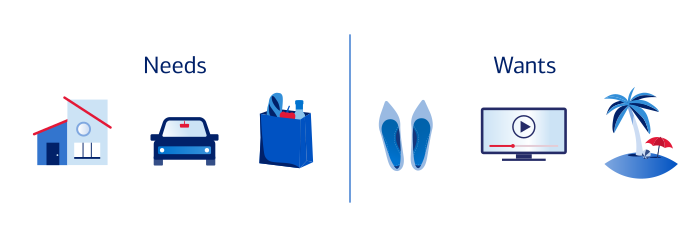
Categorize your spending into needs and wants—and then look for ways to trim from your wants list. |
||
|
Examine your spending patterns to identify ways to save on small daily expenses. |
||
|
Consider modifying your budget to prioritize goals that will help ease your overall financial stress, such as paying off a high-interest credit card. |
|
Categorize your spending into needs and wants—and then look for ways to trim from your wants list. |
||
|
Examine your spending patterns to identify ways to save on small daily expenses. |
||
|
Consider modifying your budget to prioritize goals that will help ease your overall financial stress, such as paying off a high-interest credit card. |
Build an emergency fund
Having money set aside for an emergency—such as car repairs, job loss or illness—can go a long way towards relieving financial anxiety. However, building an emergency fund can seem overwhelming, especially one with enough to cover three to six months of expenses. Don’t get hung up on the amount—what’s important is that you’re consistently setting money aside.
Build an emergency fund
Having money set aside for an emergency—such as car repairs, job loss or illness—can go a long way towards relieving financial anxiety. However, building an emergency fund can seem overwhelming, especially one with enough to cover three to six months of expenses. Don’t get hung up on the amount—what’s important is that you’re consistently setting money aside.
|
Use your budget to determine how much you can contribute each month toward savings after accounting for the expenses on your needs list. |
||
|
Prioritize building up three to six months of living expenses before you start looking at longer-term savings goals. |
||
|
Set up automatic transfers from your checking to your savings account. |
Be strategic about reducing debt
|
Use your budget to determine how much you can contribute each month toward savings after accounting for the expenses on your needs list. |
||
|
Prioritize building up three to six months of living expenses before you start looking at longer-term savings goals. |
||
|
Set up automatic transfers from your checking to your savings account. |
Credit card debt is a common source of financial stress. Not only is it expensive—it can also get in the way of your savings goals. The anxiety antidote: a plan to pay off the debt. If you have balances on multiple cards, consider using the snowball method (paying off your debts one-by-one, focusing on the smallest first) or the high-rate method (concentrating on the cards with the highest interest rates first).
Be strategic about reducing debt
|
Make the minimum payment on each of your cards. |
||
|
Pick a payment strategy and stick with it. |
||
|
Avoid taking on new credit card debt. |
Credit card debt is a common source of financial stress. Not only is it expensive—it can also get in the way of your savings goals. The anxiety antidote: a plan to pay off the debt. If you have balances on multiple cards, consider using the snowball method (paying off your debts one-by-one, focusing on the smallest first) or the high-rate method (concentrating on the cards with the highest interest rates first).
Consider outside help
|
Make the minimum payment on each of your cards. |
||
|
Pick a payment strategy and stick with it. |
||
|
Avoid taking on new credit card debt. |
Consider outside help

If you’re not satisfied with your progress in reducing debt, you may want to seek help from trusted resources, such as the Federal Trade Commission and the National Foundation for Credit Counseling. Or if you want guidance on long-term goals, such as saving for retirement or college, financial advisors can help. Finally, your friends and family may be able to offer support—just make sure to set clear boundaries and expectations to avoid damaging those relationships.
|
Monitor your progress. |
||
|
Make adjustments as your income, spending and goals change. |
||
|
Seek help if you’re struggling to keep up with minimum payments. |
Disclaimer
The material provided on this website is for informational use only and is not intended for financial or investment advice. Bank of America Corporation and/or its affiliates assume no liability for any loss or damage resulting from one’s reliance on the material provided. Please also note that such material is not updated regularly and that some of the information may not therefore be current. Consult with your own financial professional when making decisions regarding your financial or investment management. ©2026 Bank of America Corporation.
Better Money Habits®
This article originally appeared on Bank of America’s Better Money Habits® website